
Federal DOT and California Compliance Management for Construction Companies with In-House Fleets
Winning Bids and Keeping the Jobs on Schedule
You’re in the business of building things. What matters is the job being done when you said it would, because your reputation is what wins the next one.
In-house trucks and drivers give you control over the schedule. They also add a heavily regulated layer to your operations, which isn’t your core expertise.
You have enough to manage running a construction business. Fleet compliance shouldn’t be competing for that attention.
The Risk You Don’t See Until It Hits
The DOT and several California regulators set dozens of obligations for your drivers and trucks.
Unless a full-time hire makes sense, the compliance tasks get added to an existing job and lose out to more urgent priorities. That’s how things fall through the cracks.
None of it shows up in your day-to-day. It surfaces at an inspection or a renewal, and the timing is always bad.
What it costs you:
- Trucks and drivers out of service
- Jobs delayed
- Customers calling
- Your office staff putting out fires instead of doing work that pays
- The fine is the least of it
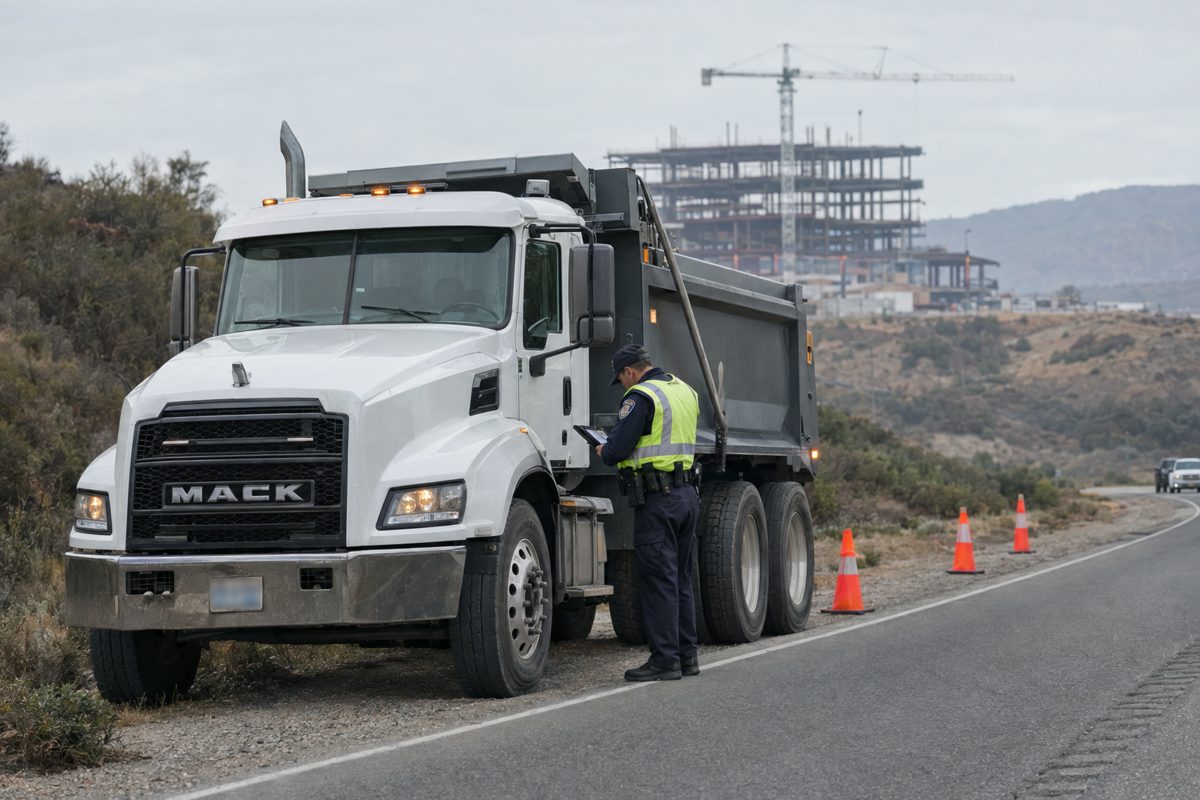
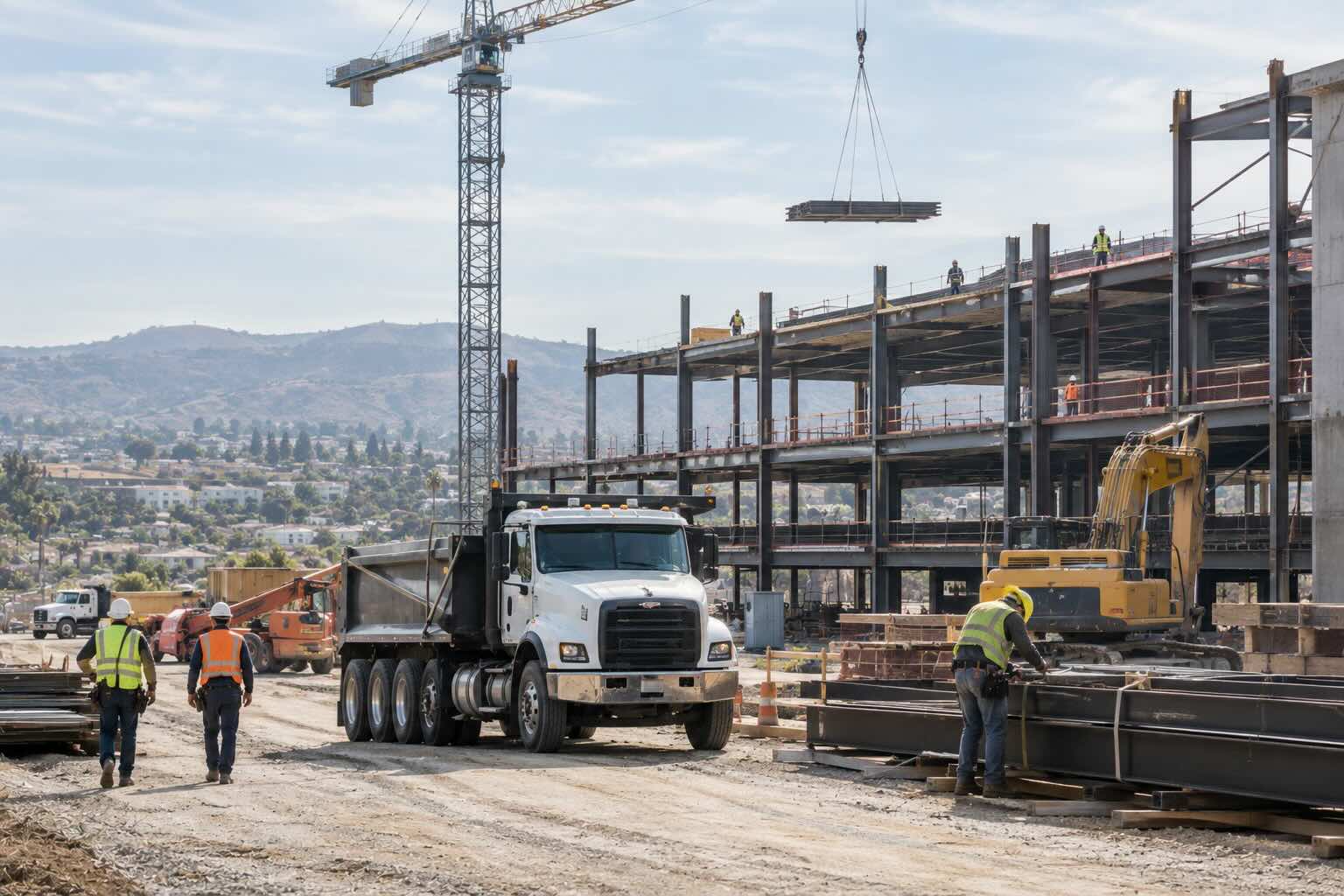
Why Most Compliance Management Options Jeopardize Your Operations
National service providers cover just DOT requirements. California is out of scope, so you handle it yourself or hire a second provider. Now the same driver and vehicle information sits in two places. When an inspector finds a discrepancy, each provider points at the other. The reconciliation and the errors are still yours to manage.
Testing consortiums run the drug and alcohol testing pool. That’s one requirement out of many, and the overall compliance workload barely moves.
Compliance software tracks the dates and tells you what’s due. The reminders are helpful, but someone still has to get it done.
Jobsite Fleet Compliance:One Provider for Your DOT and California Compliance
We manage the federal and state fleet compliance obligations and deadlines for California construction companies with in-house trucks and drivers.
Here’s what sets us apart:
- Complete coverage. Federal and California requirements handled together, so your records are in one place and you deal with one provider instead of several.
- Inspection readiness, not just reminders. We’re paid for results, not effort. We tell your team exactly what we need and follow up until we have it. Then we prepare the filing and submit it ahead of the deadline, complete and accurate.
- Responsive customer support. Your questions get answered promptly, by someone who knows your file.
- The Jobsite Concrete Guarantee™. If our error or omission causes a fine, we refund the fees you paid us in the prior 12 months, up to $10,000. Full terms published here.
The outcome:
- Trucks and drivers stay in service, so jobs run without compliance-driven delays.
- Your staff focus on paying jobs, not paperwork.
- You’re inspection-ready at all times, so no money is wasted on fines.
Frequently Asked Questions
Which of my trucks fall under these rules?
Application of the rules depends on the vehicle weight, and the threshold differs by requirement.
Federal drug and alcohol testing and driver qualification obligations apply to drivers operating vehicles at or above 26,001 lb GVWR or GCWR that require a CDL. Simply holding a CDL or a DOT number is not the deciding factor.
California uses the same 26,001 lb line for terminal inspections. CARB Clean Truck Check starts lower, at 14,000 lb. A truck over 14,000 lb but under 26,001 lb could owe emissions reporting.
We’re a construction company, not a trucking company. Do these rules apply to us?
The rules apply to the vehicles and the drivers, not to the business you’re in. Hauling your own material places you under the same requirements as a trucking company.
Most construction companies don’t think of themselves as fleet operators, which is why the requirements often go unnoticed until an inspection.
California legalized cannabis. Can a driver who tests positive for cannabis still work?
California’s off-duty cannabis protections, AB 2188 and SB 700, do not apply to federally mandated DOT testing. A driver in a DOT testing pool who tests positive for THC is removed from safety-sensitive duty, regardless of when or where they used it.
Employees outside that pool are covered by these protections. That includes office staff and drivers of lighter vehicles that don’t require a CDL. Your written policy has to keep the two groups apart.
What happens in the compliance review, and what do you need from me?
You fill out a short form with your business details. We send back a request list and a secure way to upload — driver qualification files, BIT records, DOT filings. About an hour of your office manager’s time, using records you already have.
A few days later you get a written review: what’s in place, what’s missing, what each gap exposes you to, and what we’d do about it. We’ll also walk you through the findings on a call if that’s useful.
The review is a completeness check — whether the required records exist and are current. It isn’t a line-by-line audit of what’s inside each file. If we find something that needs that level of work, we’ll tell you.
No charge, no obligation.
If you find problems, who sees the results? Are the results reported to any regulator?
At the review stage we’re not contracted by you. We have no obligation to report our findings to any agency. The review is yours, for your awareness and your decisions.
Once you hire us, you designate us to file the required reports with the regulators on your behalf. These are the same reports you would file yourself.
I’m already with a provider. Can I switch?
Usually, but it depends on your agreement — some run month to month, others carry an annual term. Send us yours and we’ll tell you what leaving would cost and whether it’s worth waiting out the term.
If I hire you and something is missed, am I still liable?
Yes. Under 49 CFR 40.15(c), using a service agent in good faith is not a defense in an enforcement action — you hold ultimate responsibility for your company’s compliance. Which is why it matters who you entrust this work to, how diligently they do it, and whether you can reach them when you need to.
Pricing
Federal DOT Compliance
Driver and vehicle compliance obligations: federal only.
- FMCSA testing program and random pool
- Clearinghouse registration, queries and reporting
- Driver qualification files
- Hours of service record review
- Vehicle maintenance and inspection records
- Written policy and supervisor training
- One calendar, every federal deadline
$65
per unit / month
A unit is the larger of your truck count or driver count.
Plus one-time onboarding and third-party fees — details below.
Federal DOT + California State Compliance
Driver and vehicle compliance obligations: federal and state.
- Everything in Federal DOT Compliance
- CHP BIT preparation and terminal records
- CARB Clean Truck Check reporting and testing coordination
- DMV Employer Pull Notice
- One calendar across FMCSA, CHP, CARB and DMV
$95
per unit / month
A unit is the larger of your truck count or driver count.
Plus one-time onboarding and third-party fees — details below.
Custom Managed Compliance Package
For fleets behind on an audit or inspection, or needing catch-up work before ongoing service starts.
- Scoped against your review findings
- Custom quote provided before work begins
- Moves to Federal DOT Compliance or Federal DOT + California State Compliance service upon completion
Talk to sales
Jobsite Concrete Guarantee™
Backed by the Jobsite Concrete Guarantee™. If our error or omission causes a fine, we refund the fees you paid us in the prior 12 months, up to $10,000.
One-time onboarding fees, in addition to the monthly pricing above
$75–150 per driver — driver qualification files
$50–100 per truck — vehicle files, CARB and BIT setup
The range reflects the scope of work involved, from reviewing and confirming existing records to building the records out from scratch. A final onboarding quote is provided upon completion of your free compliance review.
What our fees don’t cover
Collection sites, laboratories, the MRO and the agencies charge their own fees, and every fleet pays them regardless of who does the compliance management work.
We pass these through at documented cost with no markup. They appear as separate lines on your invoice, because that money goes to the third parties rather than to us.